Ansys Human Body Model
5

Supported Ansys versions:
  • 2024 R1,
  • 2024 R2,
  • 2025 R1,
  • 2025 R2,
  • 2026 R1
Required Product:
  • AEDT,
  • Electronics Desktop,
  • HFSS
The Ansys Human Body Model (HBM) is a set of HFSS projects containing geometry and material proprieties that represent the human body.
$15,000
(Contact Neva for Detailed Pricing Information)
You will be taken to an external site to complete the download.

What's new

The Neva Human Body Model enables HFSS users to perform high‑fidelity, realistic electromagnetic simulations involving the human body without relying on oversimplified phantoms or costly physical testing. Its anatomically detailed, frequency‑dependent tissue representation allows engineers to accurately predict SAR, near‑field coupling, detuning, and RF energy deposition across a wide frequency range, directly supporting regulatory compliance and safety assessments. The model’s editability and transferability across HFSS designs significantly accelerate design iteration for wearables, implants, and on‑body devices, while its compatibility with multi-physics workflows supports RF heating and implant safety studies. Overall, it reduces risk, improves confidence in results, and shortens development cycles for human‑exposed RF systems.

App Description

The Ansys Human Body Model (HBM) is a set of HFSS projects containing geometry and material proprieties that represent the human body.

The Ansys Human Body Model (HBM) is a set of HFSS projects containing geometry and material proprieties that represent the human body. There is no license check out associated with the ANSYS HBM and no additional software to install. These models can be used in HFSS, Q3D or Maxwell and are transferable from one design to the next with a copy/paste operation. The models' geometry and material properties can be edited as with any geometry. The set includes a detailed adult-male and an adult-female model with geometric accuracy down to millimeter detail and come with frequency-dependent material properties valid from 10 Hz to 10 GHz. The male HBM in detail consists of over 300 body parts including organs, muscles and bones and has three levels of model resolution designs to accommodate varying degrees of accuracy.

 NEVA Electromagnetics VHP-Female v. 3.0

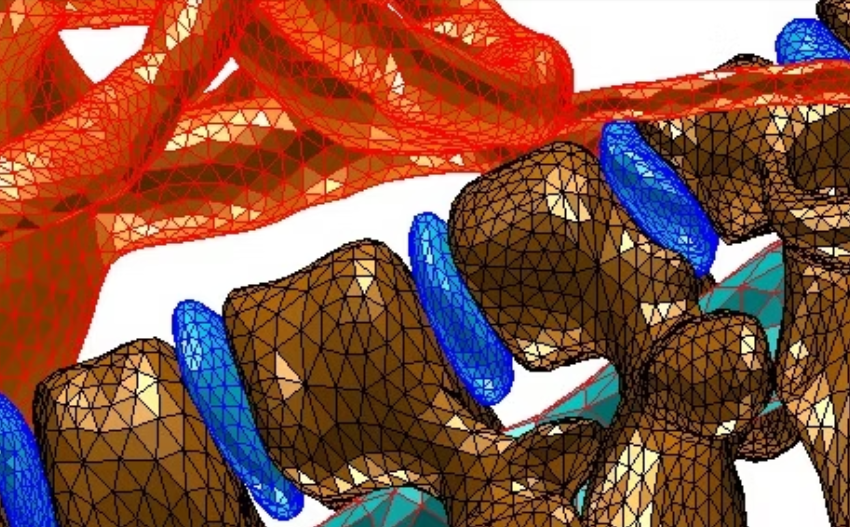
The VHP-Female v.3.0 is a platform-independent full-body computational human model. The model includes 25 individual tissues and 231 separate tissue parts, all extracted from the open-source Visible Human Project-Female dataset of the National Library of Medicine and in the form of 3D CAD objects (triangular surface meshes), with ~160,000 facets in total, including variable Body Mass Index (BMI) shells, implants, and tissues modified by implants. The surface deviation error does not exceed 0.5-3 mm in the cranium and 7 mm in the main body. The model or its parts can be used in the leading commercial electromagnetic, acoustic, and thermal simulators, or in custom research applications.

Each tissue object is a strictly 2-manifold triangular mesh (no non-manifold faces, no non-manifold vertices, no holes, and no self-intersections). No tissue mesh has triangular facets in contact with other tissue surfaces. There is always a small gap between tissue surfaces representing thin membranes separating distinct tissues, numerically characterized as an 'average body' tissue(s), and guaranteeing compatibility between CAD formats. At the same time, there exist tissues fully enclosed within each other that neither touch nor intersect. The phantom includes two versions: BASE (~160,000 facets) and ACCURATE (~640,000 facets).

Key Benefits

The Neva Human Body Model enables HFSS users to perform high‑fidelity, realistic electromagnetic simulations involving the human body without relying on oversimplified phantoms or costly physical testing. Its anatomically detailed, frequency‑dependent tissue representation allows engineers to accurately predict SAR, near‑field coupling, detuning, and RF energy deposition across a wide frequency range, directly supporting regulatory compliance and safety assessments. The model’s editability and transferability across HFSS designs significantly accelerate design iteration for wearables, implants, and on‑body devices, while its compatibility with multi-physics workflows supports RF heating and implant safety studies. Overall, it reduces risk, improves confidence in results, and shortens development cycles for human‑exposed RF systems.

Use Cases

  • Specific Absorption Rate (SAR) compliance analysis
  • Wearable and on‑body antenna design
  • Implantable medical device RF safety
  • MRI RF heating and implant safety evaluation
  • Biomedical and therapeutic RF exposure modeling

Images

image 1

Latest version

Ansys Human Body Model 5
Supported Ansys versions: 2024 R1, 2024 R2, 2025 R1, 2025 R2, 2026 R1
Publisher
Neva Electromagnetics
Support information
1010 Main Street Suite 7, Holden, MA 01520 USA
+1 713 724 1939

Connect with Ansys